Duration
1 Year
Eligibility
10th Pass
Mode
Regular/Weekend
Course Overview
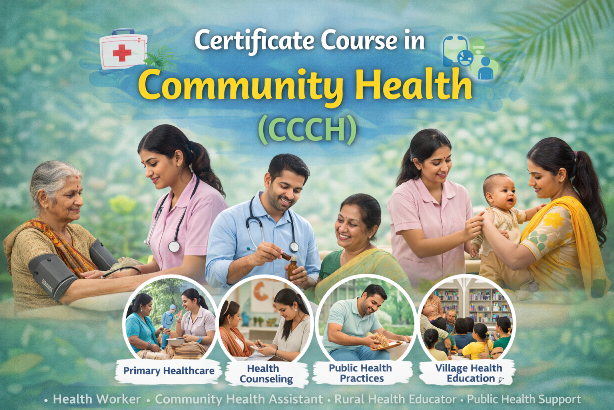
Two third population of India lives in rural area and have no access to proper health care facilities. The alma mater declaration of 1978 declared health as a fundamental right, and the attainment of highest possible level of health as a most important worldwide social goal. It also emphasized that such realization requires action from other social and economic sectors, in addition to the health sector. “Health for All” is the national goal and priority. There is an urgent need to provide para-professional health workers amongst the community itself, to provide simple preventive and curative health services including family planning, under the community workers scheme. The government launched Jan Swasthya Rakshak (Community Health Worker) Scheme to train 5,80,000 Health Worker on recommendation of Srivastave Committee in 1977. This Health Worker Scheme (1977) labelled as Community Health Volunteers in 1980 was re-labelled as village Health Guide in 1981. Due to population explosion, poverty, illiteracy and many other causes, the National Goal of “Health for All”, has not reached up to its target level. There are many areas/sectors not only in rural but also in urban India, where:
- There are no fully developed medical facilities.
- According to population density, there are no doctors in sufficient numbers.
- No proper facility is available during emergency especially during night. There is also absence of trained and knowledgeable personnel to guide or refer emergency cases to the city hospital.
- Absence of trained personnel to guide the community on family planning, measures of prevention of diseases, and hygiene, health environment, polio prevention and AIDs etc.
Therefore, there is an immediate need to prepare health work forces, who can assist, provide appropriate care/ service to the community in the rural sectors, hospitals, nursing homes and health clubs etc. These skilled personnel’s, at least one from each village/Mohalla will be trained through this Vocational Training Programme- Jan Swasthya Rakshak (Community Health Worker) Scheme. These trained persons shall work in the community as a multitasking health worker they shall work as facilitators for creating health awareness, knowledge of healthy environment, health and hygiene, first aid, prevention of diseases and provide appropriate treatment in emergency situations. Thus, it is expected, that all these gaps can be filled through the trained health workers under this programme.
Program Highlights
- Duration: 1 Years (400 Hours)
- Eligibility: 10th Pass
- Minimum Age: 18+ years
- Mode: Regular/Distance Mode
- Practical Training: Included
- Medium: Hindi / English
Curriculum (Course Code: 449-451)
The course is divided into three primary modules, each with a specific code:
- Basic Life Sciences (449): Includes human anatomy, physiology, hygiene, nutrition, and yoga for disease management.
- Maternal and Child Health Care (450): Covers pregnancy care, breastfeeding, family welfare programs, and immunization.
- Prevention and Management of Disease (451): Focuses on communicable diseases, first aid, emergency management, and drugs/drug reactions.
Admission Procedure
- Prescribed application form available with the Prospectus, which can be procured from NIOS or its training centre
- Students may submit their application form round the year at the training Centre or take admission online. (Last date of admission 31st June & 31st December)
- The admission will be valid for five years
Objectives
The aim of the Programme is to train the ‘homeopathy Learners’ in sectors of Health and Education.
After completion of this Programme, a trainee would have –
- Students can work as pharmacists in homeopathic dispensaries, clinics, or assist qualified physicians.
- Homeopathic Dispensary Assistant: Working in private or government homeopathic dispensaries and pharmacies.
- Rural Health Worker: Assisting in rural health canters and providing primary healthcare services.
- Assistant to Physicians: Supporting qualified homeopathic or general physicians in daily practice.
- National Health Programme Volunteer: Playing an active, multifaceted role in health initiatives at the state level.
These vocational roles are designed to bridge the gap in rural healthcare access, focusing on practical, on-the-ground assistance.
- Basic knowledge on Human Anatomy and Physiology;
- Understanding of Principles and Philosophy of homeopathic;
- Good knowledge of Preparations and Precautions for homeopathic practices;
- Understanding of Concepts of Health, Hygiene, Diet and homeopathic Culture;
- Learning of Applications of Integrated approach of homeopathic
- Ability to conduct homeopathic classes and Ability to train the learners.
💼 Career Opportunities
1. Community Health Worker (CHW)
- Work directly with local communities.
- Educate people about hygiene, nutrition, vaccination, maternal and child health, and disease prevention.
- Often employed by government health departments, NGOs, or international health organizations.
2. Health Educator / Health Promoter
- Conduct awareness campaigns on topics like sanitation, family planning, HIV/AIDS, TB, malaria, and lifestyle diseases.
- Work in schools, villages, urban slums, or corporate wellness programs.
3. NGO / Non-Profit Sector Jobs
- Many NGOs hire certificate holders for:
- Field officer roles
- Program assistants
- Outreach coordinators
- Survey and data collection staff
4. Government Health Programs
Depending on country and eligibility exams, you may work as:
- Health assistant
- Rural health worker
- Support staff in Primary Health Centers (PHCs)
- Public health campaign staff (immunization drives, census health surveys, etc.)
5. Hospital & Clinic Support Roles
- Patient care assistant
- Health counselor
- Frontline support in outpatient departments
- Basic first-aid and triage assistance
6. School Health Programs
- Assist in student health checkups
- Conduct hygiene and nutrition sessions
- Support vaccination and screening programs
7. Elderly Care / Home Care Services
- Work with home-care agencies.
- Provide basic health monitoring and support for elderly or chronically ill patients.
8. Further Education Pathways
This certificate can also be a stepping stone to higher qualifications such as:
- Diploma in Community Health
- ANM / GNM Nursing
- Public Health degrees
- Social Work or Health Administration
Skills You Gain
- Basic medical knowledge and first aid
- Communication and counseling
- Record keeping and reporting
- Community engagement
- Awareness program planning
Salary Expectations
- Entry-level and varies by region.
- Typically modest at the start, but improves with experience, additional certifications, and government roles.
Work Settings
- Villages and rural clinics
- Urban slums and outreach centers
- NGOs and international aid agencies
- Government health missions
- Schools and community centers
Course Fee
The Fee for the Programme is ₹ 10,000* for Indian Citizens. The fee includes the cost of Study Material, & Exclude Examination and Practical/ Training.
- The centre will charge the separate fee of accommodation, food & other miscellaneous facilities accordingly.
Passing Criteria
A candidate should secure 50% marks in all components separately to be eligible for certification