Duration
1 Year
Eligibility
12th passed (Science preferred) or Equivalent
Mode
Regular / Weekend
Course Overview
Ayurveda is science of Life. It’s not only the system of mere treating illness but integration between mind, body and soul. Thats why, in countries beyond India, Ayurveda therapies and practices have been integrated in general wellness applications and in medical use as well.
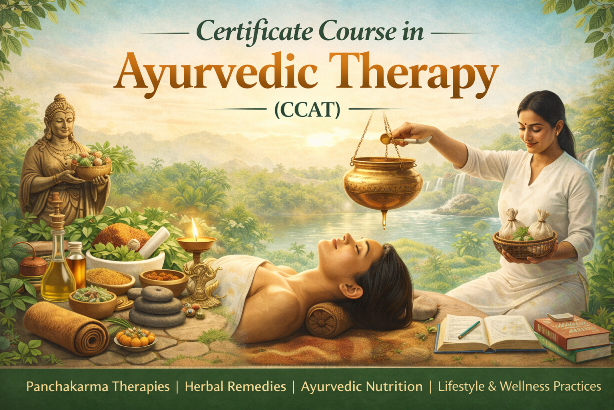
To meet this requirement, NIOS has developed a vocational course in health & paramedical namely Certificate in Ayurvedic therapy, through open learning mode of education. Ayurvedic therapy works by instinct and intuition, using techniques developed through regular practice and proper guidance. The Ayurvedic Therapy course is designed for proper rational understanding and provides sound guidance for developing an ethical practice as an Panchakarma assistant. The course includes comprehensive theoretical and practical applications of Ayurveda and enables you to acquire and hone your skills in authentic massages and healing therapies adding extra value to your professional profile. The course also equips the learner in relieving physical and mental stress, support in treatment of common health issues, etc.
We are confident that this course will prove to be beneficial for you, as this course has a wide scope as learner may assist Ayurvedic doctors, Ayurvedic Consultants at Govt.or private Ayurvedic hospitals, etc.
Program Highlights:
- Duration: 1 Year (300 Hours)
- Eligibility: 12th Class passed (Science preferred) or equivalent from a recognized board.
- Mode: Regular / Weekend
- Practical Training: Included
- Minimum Age: 18+ years
Medium of Instruction:
- Hindi and English
Course Fee:
- Rs. 15,000/-
Course Curriculum-(Theory + Practical):
- Introduction to fundamentals of Ayurveda (Code- 721)
- Introduction to different therapies in Ayurveda (Code- 722)
Objective of the Course:
- Teach basic Ayurvedic science and philosophy.
- Develop skills in therapeutic methods of Ayurveda.
- Train learners to provide supportive care (like Panchakarma assistance).
- Prepare you practically and ethically for wellness services and patient support
💼 Career Opportunities After Certification
Completing a certificate course can open several paths:
🩺 Working in Healthcare
-
Ayurveda Therapist / Technician in Ayurvedic hospitals, dispensaries, Panchakarma centers
-
Ayurvedic Wellness Coach at wellness centers & retreats
-
Assistant in Ayurvedic Clinics / Spa
-
Ayurveda Treatment Support Staff (pulse diagnosis, dietary planning etc.)
🧘 Wellness & Spa Industry
-
Employment at wellness resorts, yoga retreats, holistic health centers
-
Therapies like Abhyanga, Shirodhara, herbal body treatments
-
Integrate Ayurveda with yoga and meditation services — high demand in tourism & wellness tourism.
💻 Consulting and Freelance Work
-
Online Ayurvedic consultations
-
Personalized diet, wellness, and lifestyle programs based on Ayurvedic principles
-
Workshops or retreats for health coaching & detox plans.
🚀 Entrepreneurial Options
-
Start your own Ayurvedic wellness center / massage studio
-
Create herbal formulations, natural products, health-tech service lines
-
Partner with spas and retreat businesses.
📊 Demand & Growth Potential
-
Ayurvedic therapy and wellness professions are growing as people seek natural and preventive healthcare.
-
Government initiatives are now expanding certificate programs to train Panchakarma technicians and boost employment in the Ayurveda sector.
🎯 Salary & Job Indicators (Indicative)
After certification and experience:
-
Entry-level Ayurvedic Therapist: ~₹1.5 L to ₹3 L per year
-
With experience / specialization: higher (clinic manager, senior therapist)
-
Ayurvedic Therapist useful for career roles as Ayurvedic assistant
Important Notes
- It is a vocational certificate, not a BAMS doctor’s degree — it trains therapy proficiency, not full medical prescription/diagnosis rights.
- Recognition is by the Government via NIOS, but scope of practice may vary locally — always check with local Ayurvedic council/health department for employment/licensing rules.
- Admission usually on a first-come, first-serve basis